

What is an LNB ?
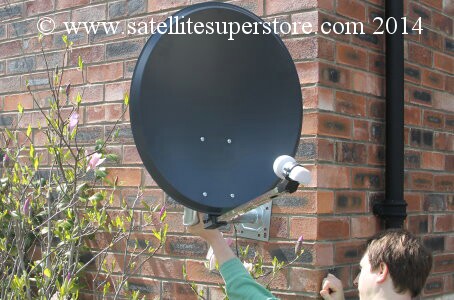
An LNB is the box of electronics on the end of the dish boom arm. It acts like a aerial masthead
amplifier. The signal (microwaves) reflect off the dish and into the feedhorn to the LNB.
Here it is amplified and the frequency is lowered. The lower the noise figure the better.
i.e. in simple terms, it pulls in the signal better. The signal is then sent down the coaxial cable to the
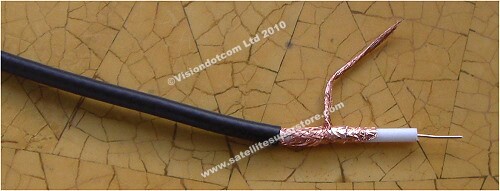
satellite receiver. Quality digital cable should be used. (not CT100 or RG6)
See our
Satellite Cable for good digital cable.
A universal LNB covers the KU band from 10700 to 12750Ghz with LO frequencies of 9750 and 10600.
There are
Single LNBs, Twin
LNBs, Quad LNBs, Octo
LNBs and
Quatro LNBs. Single have one output,
twin - two outputs, quad - 4 outputs and Octo - 8 outputs. All outputs are the same and are equivalent to
a single LNB. A twin LNB could be used for two single tuner satellite receivers or a twin tuner satellite receiver
Quatro LNBs have 4 outputs and they are all different. Quatro LNBs can only be used with
multiswitches.
There are also 40mm clamp LNBs and C120 LNBs. This refers to the way they fit on a dish. A 40mm LNB has an
integral offset feedhorn and fits to the most common types of offset dishes.
C120 flange LNBs fit on a separate feedhorn and could be used on either offset or prime focus dishes.
They are usually used on specialist high quality dishes.
Both 40mm and C120 LNBs could have single, twin, quad or quatro outputs.
At the moment only 40mm LNBs have octo outputs.
Using a quatro LNB and a multiswitch it is posible to have many more outputs. Even 32 outputs or larger.
A
Sky mini dish LNB uses a fixing that is none standard and a tongue fits into the end of the boom
arm
To find out more about LNBs and how the perform go to
Getting More Signal.